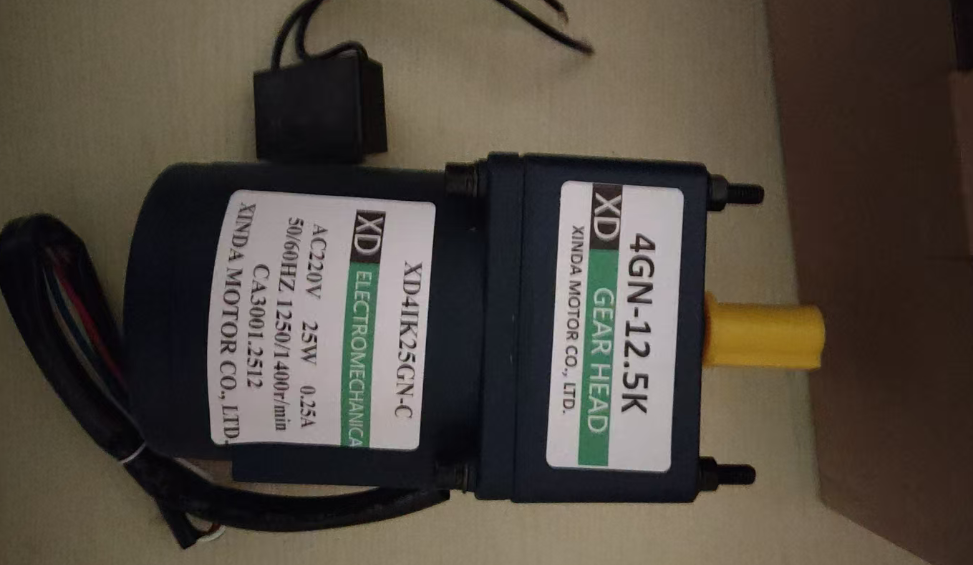
Selecting a DC geared motor is a systematic project that requires comprehensive consideration of factors such as load, speed, and installation. The following are detailed selection steps and methods, with the core principle being to start with the end in mind and work backward from the load requirements to determine the motor specifications.
I. Four Core Selection Elements (Four Key Parameters)
Any selection revolves around these four core parameters:
1. Output Speed
2. Output Torque
3. Power Supply Voltage
4. Installation Dimensions and Method
—
II. Detailed Selection Steps
Step 1: Clarify the Application Scenarios and Basic Requirements
· Equipment Function: What will it drive? (e.g., wheels, conveyor belts, robotic arms, lifting mechanisms, etc.)
· Working Environment: Normal temperature, high temperature, humidity, dust, vibration/shock?
· Duty Cycle: Continuous operation, intermittent operation, short-term operation?
· Special Requirements: Is a brake, encoder (for position/speed feedback), or waterproof/dustproof rating (IP rating) required?
Step 2: Determine the required output torque for the load (most critical)
Insufficient torque can lead to motor stalling, overheating, or even burnout. The calculation must consider:
• Load resistance torque:
• Frictional resistance: Friction torque = Load weight (kg) * Coefficient of friction * Wheel/transmission radius (m) * Gravitational acceleration (9.8)
• Acceleration torque (dynamic load): Acceleration torque = Moment of inertia (kg·m²) * Angular acceleration (rad/s²). An object needs additional torque to accelerate from rest to the target rotational speed.
• Boost torque (counteracting gravity): Boost torque = Load weight (kg) * Gravitational acceleration (9.8) * Lever arm radius (m)
• Transmission system efficiency: Gear, belt, and other transmission mechanisms have energy losses; the efficiency η is typically between 0.7 and 0.95.
• Safety factor: To ensure reliability and handle unexpected situations, the calculated total required torque should be multiplied by a safety factor (usually 1.5 to 2.5).
Final Required Torque Formula (Simplified):
Total Required Torque ≥ (Friction Torque + Acceleration Torque + Boost Torque) / Transmission Efficiency η * Safety Factor
Simplified Method (Empirical Estimation): For common applications such as mobile robots, torque can be estimated using Torque = Force * Radius. For example, to push a 10kg object (friction force approximately 10N), with a drive wheel radius of 0.05m, the required torque is approximately 10N * 0.05m = 0.5 N·m.
Step 3: Determine the Required Output Speed for the Load
Determine based on the equipment’s operating speed requirements.
· Linear speed to speed: Speed (RPM) = [Linear speed (m/min)] / [π * Wheel diameter (m)]
· Influence of Gear Ratio: If a gearbox is already available, the motor’s input speed = output speed (RPM) * reduction ratio.
Reduction Ratio Selection: Reduction ratio i = Motor rated speed / Required output speed. Meanwhile, the gearbox amplifies torque: Output torque ≈ Motor rated torque * Reduction ratio * Transmission efficiency. Therefore, choosing the reduction ratio is a trade-off between speed and torque.
Step 4: Calculate the motor’s power requirement (for verification)
Power can be derived from torque and speed:
Power (W) ≈ [Torque (N·m) * Speed (RPM)] / 9.549
This power is the mechanical power on the output shaft. The motor’s input electrical power will be greater (considering the efficiency of the motor and gearbox).
Step 5: Determine the power supply voltage and type
· Voltage level: Choose according to your power system (e.g., 12V, 24V, 48V). Higher voltage results in lower current and lower line loss for the same power, but the controller cost may be higher.
· Motor type:
· Brushed DC motor: Low cost, simple control, but shorter lifespan (due to carbon brush wear), and electromagnetic interference.
• Brushless DC Motors: Long lifespan, high efficiency, low noise, but require a matching driver (ESC), resulting in high cost.
Step 6: Matching the Motor and Gearbox
Checking the “Torque-Speed” curve provided by the motor manufacturer is crucial.
1. Based on your calculated “required torque” and “required speed,” determine an operating point on the curve.
2. Ensure this operating point is within the motor’s continuous operating range (usually bounded by the rated torque/power line), not in the short-time or overload zone.
3. Leave a margin to avoid the operating point being too close to the limit curve.
Step 7: Checking Other Key Parameters
• Rotational Inertia Matching: For applications with high dynamic response (frequent starts and stops, rapid acceleration and deceleration), the ratio of load rotational inertia to motor rotor inertia should not be too large (generally recommended <10, with higher requirements for servo applications), otherwise control will be difficult.
• Dimensions and Installation Method: Determine if the motor’s flange dimensions, shaft diameter, keyway, wiring method, etc., are compatible with the equipment. Common installation methods include NEMA standard flanges, square flanges, and round flanges.
• Lifespan and Noise: Check if the gearbox’s backlash (affects positioning accuracy), rated lifespan (usually measured in hours), and noise level meet requirements.
—
III. Selection Flowchart Summary
“` Start
↓ Analyze Load → Determine 【Required Torque】 and 【Required Speed】
↓ Select 【Voltage Rating】 and 【Motor Type】 (Brushed/Brushless)
↓ Initially select 【Reduction Ratio】i → Calculate the required torque and speed at the motor end
(Torque Requirement / i, Speed Requirement * i)
↓ In the 【Torque-Speed Curve】 of the candidate motor models,
find the operating point that meets the calculated values and has an appropriate margin
↓ Check auxiliary conditions such as 【Installation Dimensions】, 【Moment of Inertia】,
【Lifespan】, and 【Backlash】
↓ No ← Are all conditions met? ↓ This is to confirm the final model.
“`
IV. Practical Tips and Precautions
1. Utilize manufacturer selection software/services: Major manufacturers such as Dongfang Motor, Maxon, and Dechang offer online selection tools or technical support. Simply input the parameters to receive model recommendations.
2. Work backward from sample data: During the initial estimation, find several similar motor samples and check their rated values as a reference for your design.
3. Temperature rise is the ultimate limit: Motor burnout is mostly due to overheating caused by prolonged overload. Ensure your actual operating current is less than the motor’s rated current.
4. Starting/locked torque: The motor’s starting torque (locked torque) is much greater than the rated torque, which can be used to overcome static friction, but it cannot operate under this condition for extended periods.
5. Consider the control method: If using PWM speed control, the torque will decrease at low speeds; if precise position control is required, an encoder must be installed and a low-backlash gearbox must be selected.
Finally, it is recommended that for critical applications or when uncertain, you contact the supplier’s technical support and provide as much detailed application information as possible. They can provide the most professional selection advice. During the initial design phase, if conditions permit, consider purchasing a model with slightly higher torque for physical testing.
Post time: Jan-01-2026