Okay, this is a very practical question. Understanding the types, usage, and maintenance of coffee bean roasters is key to ensuring roasting quality and machine lifespan.
Part 1: Types of Coffee Bean Roasters
They can be mainly classified according to their working principle and scale of use.
Classification by Working Principle:
1. Hot Air Roaster
· Principle: Similar to a large air fryer. A heater and a powerful fan circulate high-temperature hot air within the roasting chamber, suspending the coffee beans and ensuring even heating.
· Advantages: Fast heating, even roasting, easy cleaning, and relatively low price.
· Disadvantages: May result in a less complex flavor profile and may remove some small-molecule aromas.
· Suitable for: Home beginners and small-batch roasters.
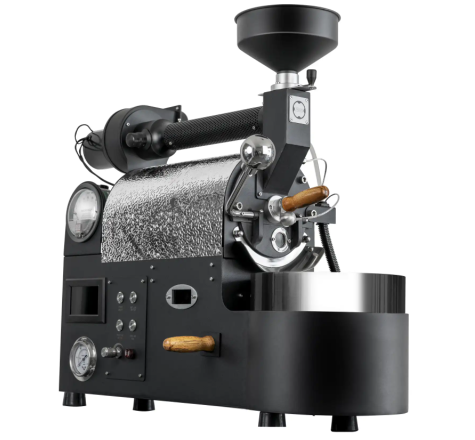
2. Direct/Semi-Hot Air (Drum) Roaster
· Principle: Coffee beans are heated inside a continuously rotating metal drum. The heat source (gas or electricity) heats the drum walls externally (conduction heat), while hot air passes through the drum (convective heat). Most professional models fall into this category.
* **Advantages:** Fuller flavor development, richer layers of flavor, and extremely high control over the roasting process.
* **Disadvantages:** Higher price, requires a cooling system, and generates smoke that needs to be dealt with.
* **Suitable for:** Mainstream choice, from home use to all commercial scenarios.
3. Other Simple Tools (Informal Models)
* **Hand-held Net:** Directly shakes and roasts over an open flame; extremely difficult to control, for demonstration purposes only.
* **Fryer/Popcorn Maker:** A very basic alternative, lacking consistency, not recommended.
Classified by Usage Scale:
Type | Batch Capacity | Features | Applicable Scenarios
Home Use | 50g – 500g | Simple structure, primarily electric heating, some with automatic programs. For personal hobbyists and home use.
Commercial Use | 1kg – 30kg+ | Primarily gas heating, precise control, high stability requirements. For boutique cafes and independent roasteries.
Industrial grade, tens to hundreds of kilograms, fully automatic, continuous roasting, efficiency first. Suitable for large coffee brands and instant coffee ingredient manufacturers.
—
Part Two: How to Use (Taking a typical home/small commercial drum roaster as an example)
Roasting is both a science and an art. Please follow these basic steps:
1. Preparation
· Installation and Ventilation: Ensure the machine is in a well-ventilated area and correctly connect the exhaust pipe (if applicable). Commercial machines require professional installation.
· Cleaning and Inspection: Ensure the machine is clean inside and out, especially the drum and cooling tray.
· Preheating: Turn on the machine to preheat it to the target starting temperature (usually 180-200°C). Insufficient preheating will result in uneven roasting.
2. Bean Feeding and Recording
· Weighing Green Beans: Weigh the green beans according to the machine’s rated capacity. Do not overload.
· Feeding Beans: Feed the green beans into the bean hopper or drum and record the feeding time.
• Start Recording: Use roasting software or a notebook to record time and temperature changes.
3. Monitoring and Control (Core Process)
This is crucial for the roaster to control flavor, achieved by adjusting three main variables:
* **Heat:** Initially, the heat is high. After dehydration or around the first crack, it needs to be reduced appropriately to prevent excessive temperature rise.
* **Airflow:** Initially, the airflow is low to retain heat. Later, it is increased to expel smoke and silverskin, and to control the pace of flavor development.
* **Turner Speed (if adjustable):** Affects the efficiency of bean mixing and heat conduction.
4. Key Node Judgments
* **Dehydration Period:** Beans turn from green to yellow, and a toasty, grainy aroma is detected.
* **First Crack:** Hearing a series of crisp, crackling sounds indicates the Maynard reaction has reached its peak, and the coffee begins to develop its own flavor.
* **Second Crack:** The sound becomes softer, like cracking, indicating the start of the dark roast stage.
5. Removing and Cooling
• Removing: Immediately remove the beans from the drum after reaching the target roast level.
• Cooling: Quickly pour the beans into the cooling tray, start the agitator and fan, and cool the beans to room temperature within 1-4 minutes. Cooling speed is crucial to lock in flavor.
—
Part Three: Maintenance and Care Methods
Proper maintenance ensures consistent roasting and significantly extends the machine’s lifespan.
1. Daily Cleaning (After Each Roast)
• Cooling Tray and Chip Tray: Clean the silver plating and debris from the cooling tray and dust box.
• Exterior Wipe: Wipe the machine exterior with a slightly damp, soft cloth.
2. Weekly/Deep Cleaning Every 10 Roasts
• Drum Interior: Thoroughly clean the drum interior and blades using a dedicated brush. For stubborn oil stains, use a machine-specific cleaner.
• Dust Collection System: Empty and clean the dust collector (cyclone separator or dust box). • Observation Window/Probe: Clean the observation window and temperature probe, ensuring they are free of oil and contaminants to guarantee accurate readings.
3. Regular Maintenance (Monthly/Quarterly)
• Check and Tighten Screws: Pay special attention to the screws securing moving parts such as rollers, fans, and motors.
• Check Belts (if any): Check for loose or worn belts.
• Lubrication: Apply high-temperature, food-grade lubricant to the specified bearings and moving parts according to the manufacturer’s manual.
• Check Gas Connections (Gas Motor): Check gas line connections for leaks using soapy water.
4. Annual Professional Maintenance
• For commercial machines, it is recommended to hire a professional technician for an annual major maintenance, including checking the fan motor, calibrating the temperature sensor, and conducting a comprehensive inspection of the gas and electrical circuits for safety.
Core Maintenance Principles:
• Safety First: All maintenance must be performed only after the machine is completely powered off and has cooled down.
• Thorough Cooling: Never clean the machine while it is hot, especially with liquids, to avoid deformation or damage.
• Refer to the manual: Strictly follow the maintenance guidelines provided by the manufacturer.
• Keep a log: Record the content and time of each cleaning and maintenance session for easy tracking and planning.
By understanding the type, mastering the usage methods, and strictly adhering to maintenance procedures, you can not only roast coffee with exceptional flavor but also make your roaster a stable and reliable long-term partner.
Post time: Nov-22-2025