In the food processing industry, long-shaft motors are a common type of power equipment, mainly used to drive mechanical devices such as mixers, conveyors, and grinders. These motors need to meet the special requirements of the food production environment, such as corrosion resistance, ease of cleaning, and high-temperature resistance. The design and use of food-grade long-shaft motors directly affect production efficiency and food safety; therefore, special attention is required in their selection, installation, and maintenance.
1. Features of food-grade long-shaft motors
Food-grade long-shaft motors have unique performance requirements compared to ordinary motors. The materials used in these motors are diverse and meet food hygiene standards. They typically use stainless steel or other corrosion-resistant materials for the casing and key components to prevent rust or food contamination. The motors must have excellent sealing performance to prevent water, oil, or other liquids from seeping into the interior, affecting motor lifespan or contaminating the production environment. The noise and vibration generated during 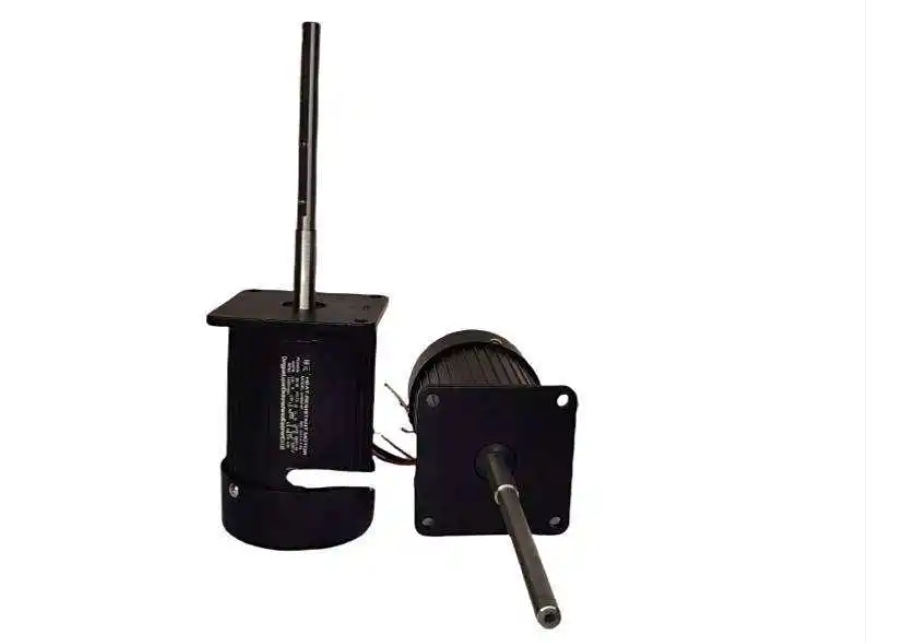 should be minimized to reduce interference with the production environment.
In terms of power and speed, the selection of food-grade long-shaft motors depends on the specific application. For example, motors used in mixing equipment may require higher torque, while conveyor belt driven motors prioritize stable speed. The motor’s insulation and protection ratings also need to meet the environmental requirements of food processing plants, typically with a protection rating of at least IP55 to ensure normal operation in humid or dusty environments.
2. Application scenarios of food-grade long-shaft motors
Food-grade long-shaft motors are widely used in various food processing stages. In pasta production, motors drive dough mixers, dough presses, and other equipment to ensure uniform mixing and shaping of the dough. In the beverage industry, motors are used to pump liquids or drive filling equipment, ensuring continuous operation of the production line. Long-shaft motors also play an important role in meat processing and dairy production.
3. Maintenance and Care of Food-Grade Long-Shaft Motors
1. Food-grade long-shaft motors must meet hygiene standards, and the materials must be corrosion-resistant and easy to clean.
2. Different food processing scenarios have different requirements for motor power, speed and environmental adaptability.
3. Regular maintenance and proper cleaning are key to extending the lifespan of the motor.
Post time: Nov-10-2025