Thermal expansion and contraction are physical properties of most metallic materials . The thermal expansion and contraction properties of motor components are particularly noticeable during motor operation. To mitigate the impact of this phenomenon on the overall performance of the motor, necessary countermeasures are taken in the selection of component materials, control of the manufacturing process, and the fit between components.
The bearing support system is a crucial component of motor products, ensuring the normal operation of the mechanical transmission system. Typically, the bearing support system supporting the rotating parts of the motor is designed with a two-point structure, one fixed end and the other floating end. Why? It sounds simple: the various components of the motor inevitably expand and contract with temperature changes. However, upon closer examination, this seemingly simple problem is not as straightforward as it appears. The question of how to position the fixed or floating end often presents designers with a difficult dilemma. Next, Ms. Can will discuss how to mitigate the impact of thermal expansion and contraction on the mechanical performance of the motor.
The shaft extension is the mating part between the electric motor and the driven equipment. The relative stability of the shaft extension in the radial and axial directions is undoubtedly the key to ensuring the rotational accuracy of the equipment. In addition to ensuring that the rigidity and machining accuracy of the motor shaft extension meet the requirements during the manufacturing process, the control of the axial displacement of each component of the motor stator and rotor is also very important. Prioritizing the motor shaft extension end as the fixed end can perfectly eliminate .
When the driven equipment does not have high requirements for the axial displacement of the motor shaft, or when the bearings selected for the motor are more focused on load capacity, the non-shaft extension end can be chosen as the fixed end. However, for driven equipment with high requirements for controlling the axial displacement of the motor, or when the load is large equipment, it is best to set the bearing support point at the shaft extension end as the fixed end. The three-bearing structure of large high-voltage motors and low-voltage high-power motors actually balances the design goals of sufficiently large load capacity and high precision matching with the supporting equipment.
In the bearings configured in motor products, the fixed-end bearing is used for axial positioning and fixation. This fixed-end bearing must be selected to withstand combined radial and axial loads. Other bearings besides the fixed-end bearing can be designed as floating-end bearings that only bear radial loads, compensating for the thermal expansion and contraction of motor components caused by temperature changes, and also allowing for fine-tuning of axial misalignment caused by unavoidable assembly errors. If the effects of shaft expansion and contraction caused by temperature changes cannot be compensated for, the bearing will be in a stuck state, causing abnormal axial loads and severe overheating, leading to premature failure or damage.
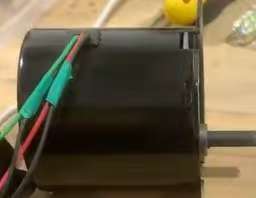
For the floating end bearing of the motor, cylindrical roller bearings with separable inner and outer rings and axial movement, such as NU and N type, and radial needle roller bearings can be used. These bearings are easy to install and disassemble. When a non-separable bearing is selected for the floating end bearing, sufficient clearance must be left between the inner and outer rings of the bearing and the bearing cap to allow for expansion and contraction due to shaft temperature changes without causing misalignment and jamming of the inner and outer rings.
Post time: Dec-20-2025