Industrial pumps are core equipment for fluid transportation, widely used in chemical, metallurgical, water supply and drainage, and other fields. The motor, as the “power source” of the industrial pump, directly determines the pump’s operating efficiency, stability, and service life. Industrial pumps operate under complex and varied conditions, placing stringent and precise demands on motor performance. Selecting the right motor is crucial to ensuring the industrial pump achieves optimal efficiency.
Power matching is the primary prerequisite. The motor power of an industrial pump needs to be precisely matched with core parameters such as the medium being pumped, head, and flow rate. Excessive power can easily lead to energy waste, while insufficient power will prevent the pump from reaching its rated operating conditions and may even burn out the motor. Especially in heavy industrial scenarios with high head and high flow rates, the motor must have sufficient rated power and overload capacity to handle the load impact at startup and avoid downtime that could disrupt production continuity.
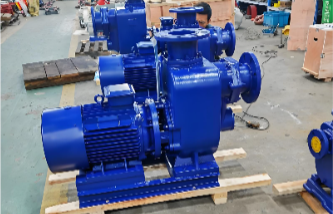
High efficiency and energy saving are the core requirements. Industrial pumps are mostly continuously operating equipment, and motor energy consumption accounts for more than 80% of the total energy consumption of the equipment. High-efficiency motors can significantly reduce the operating costs of enterprises. At present, ultra-high efficiency motors of IE4 and above have become the industry mainstream. They have lower losses and higher conversion efficiency. Combined with variable frequency speed control technology, the speed can be dynamically adjusted according to the pump’s operating conditions, further improving the energy-saving effect and aligning with the “dual carbon” transformation trend in the industrial sector.
Stability and reliability are key guarantees. Industrial pumps often operate under harsh conditions of high temperature, high pressure, and strong corrosion. The motor must have good insulation performance, heat dissipation capacity, and anti-interference ability to ensure long-term stable operation and reduce the number of downtimes due to failure. At the same time, the motor’s protection level must be suitable for the working environment to prevent dust and moisture intrusion. The wear resistance and fatigue resistance of core components such as bearings and windings also directly affect the motor’s operational stability.
In addition, industrial pumps have specific requirements for the starting performance and speed regulation accuracy of the motor. Soft start function can avoid current surges during startup, effectively protecting the pump body and motor; precise speed regulation performance can adapt to the flow rate and head requirements under different operating conditions, improving the accuracy of fluid delivery.
In summary, the stringent requirements for motor power, energy efficiency, and stability in industrial pumps are essentially aimed at achieving efficient, stable, and energy-saving fluid transport. Selecting the right motor not only improves the operational efficiency of industrial pumps but also reduces enterprise maintenance costs, thus safeguarding industrial production.
Post time: May-26-2026