Motor duty cycles are operating standards based on load, start-stop, and cooling cycles. Amusement equipment experiences large load fluctuations and frequent start-stop cycles, so different facilities must be matched with motors of the corresponding duty cycles. Mixing them can easily lead to overheating, burnout, and safety failures.
Operating mode: Continuous long-term operation under constant load, with the motor fully dissipating heat until a stable temperature rise is achieved, without any shutdown cooling phase. Constant load, long-term steady state, and very few starts.
Structural features: The cooling fan operates continuously, and the heat-resistant winding design is adapted to steady-state heat generation.
Applicable environment and amusement facilities: Only for auxiliary machines that operate under constant conditions for a long time, such as pump room water pumps, machine room exhaust fans, and lighting cooling fans.
2. S2 Short-Time Work System
Operating mode: Fixed short-term load operation, followed by shutdown for complete cooling. Single working time is 10/30/60/90 minutes, with the working time being much shorter than the cooling time.
Applicable environments: equipment used in a low-frequency, short-term manner, such as hoists and small maintenance lifting platforms in parks; rarely used for passenger-carrying amusement rides.
Operating limitations: It does not support multiple cycle start-stop operations, and the temperature rise exceeds the standard when used repeatedly.
3. S3 Intermittent Cycle Work System (Amusement Park Core Work System)
Operating mode: Periodic cycle, each cycle includes load operation + shutdown and static cooling, no forced air cooling shutdown, divided according to load duty cycle (FC) (15%, 25%, 40%, 60%).
Design advantages: Enhanced rotor and winding shock resistance, and tolerance to frequent starting high currents.
Suitable for amusement environments: The equipment starts and stops every few minutes, carrying passengers in cycles, with high and low loads alternating, perfectly matching the intermittent cycle characteristics of S3.
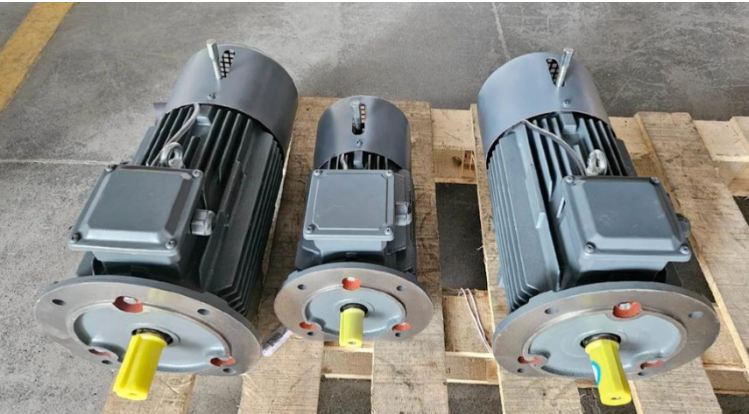
4. Other work schedules
The definitions of other work schedules are as follows, which will not be detailed in this article. For specific details, please refer to standard GB 755 / IEC 60034-1.
S4 duty cycle – including intermittent periodic duty with start-up:
It operates in a series of identical working cycles, each cycle including a start-up time that has a significant impact on temperature rise, a constant load operation time, and a power-off shutdown time.
S5 duty cycle – including intermittent periodic duty cycle with electric braking:
It operates in a series of identical working cycles, each cycle including a start-up time, a constant load operation time, a rapid electric braking time, and a power-off shutdown time.
S6 work schedule – continuous periodic work schedule:
It operates in a series of identical working cycles, each cycle including a period of constant load operation time and a period of no-load operation time, but without any power outage stop time.
S7 duty cycle – including continuous cycle duty with electric braking:
It operates in a series of identical working cycles, each cycle including a start-up time, a constant load operation time, and a rapid electric braking time, but without a power-off stop time.
S8 duty cycle – including continuous cycle duty with variable speed and load:
It operates in a series of identical working cycles, each cycle including a period of constant load operation at a predetermined speed and one or more periods of operation at different speeds with other constant loads, but without any power outage stop time.
S9 duty cycle – a duty cycle with non-periodic changes in load and speed:
Non-periodic duty cycles in which load and speed vary within permissible ranges. This duty cycle includes frequent overloads, with values far exceeding full load.
S10 duty cycle – Discrete constant load duty cycle:
Duty cycles include a specific number of discrete load values (or equivalent loads)/speeds (if possible), and the operating time for each load/speed combination should be sufficient for the motor to reach thermal stability. The minimum load value in a duty cycle can be zero.
5. Summary
S1 continuous motors are rarely used in amusement rides; S3/S4/S5 are the most commonly used models. The more frequently the equipment starts, stops, and brakes, the more necessary it is to select a dedicated duty cycle motor with braking and starting capabilities, and match it with the corresponding load duty cycle, in order to avoid motor overheating and shutdown failures and ensure the safe operation of amusement rides.
In China, motor selection generally abandons complex theoretical duty cycles and uses load duty cycle (FC) and service factor (SF) as the core basis to adapt to the equipment’s impact, start-stop, and braking characteristics, thereby ensuring operational safety.
Default load duty cycle: Oscillating brake type FC25%; Intermittent rotation type FC40%; Ferris wheel FC60%
For all large amusement rides, the minimum SF (square foot) benchmark value must not be lower than 1.2.
Giant pendulum rides, pirate ships, and drop towers generally have an impact load of at least 1.5, which cannot be covered, making them prone to overheating and shutdown or winding burnout in summer.
Post time: Jul-18-2026