Behind automated equipment, intelligent machinery, and industrial production lines, there is always a core component that works silently. It can slow down high-speed motors and unleash super torque to support the stable operation of various equipment—that is the gear reduction motor.
You might be unfamiliar with this name, but it has already permeated every aspect of production and daily life. From automated conveyor belts and packaging machinery in factories to smart access control systems and small lifting devices in daily life, and even precision robot joints and medical instruments, they all rely on its support. Today, we’ll take you through a comprehensive breakdown of this “hidden king” of industrial transmission to understand its core strengths!
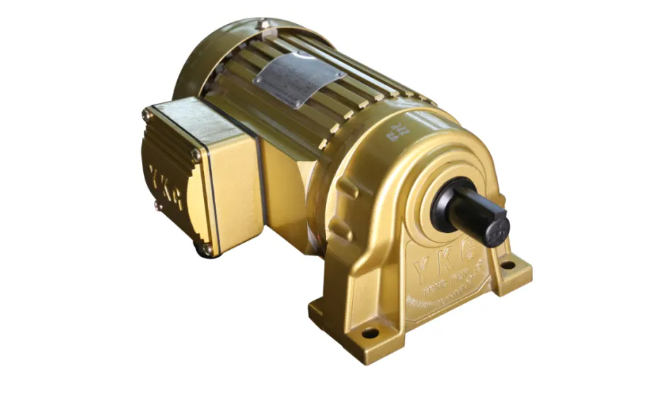
I. What is a geared motor? In short…
A geared motor, simply put, is an integrated device that combines a motor and a gear reducer; it is also commonly referred to as a gear motor.
Ordinary motors operate at high speeds and low torques, making it difficult to directly drive heavy-load, low-speed equipment. Gear reducers, on the other hand, reduce the high speed of the motor through the meshing of precise internal gear sets, while simultaneously amplifying the output torque, perfectly achieving the core effect of “speed reduction and torque increase,” making the motor’s power more suitable for the operating needs of various equipment.
It breaks away from the cumbersome separate installation of traditional motors and reducers. The integrated design not only saves installation space but also improves transmission efficiency and reduces failure points, making it the preferred power solution in the field of modern industrial transmission.
II. Core Advantages: Why do industrial equipment manufacturers prefer it?
Compared to ordinary motors and separate transmission components, geared motors have become the “standard equipment” in industrial equipment due to their four core advantages:
1. Excellent power adaptability, high torque at low speeds.
This is its core highlight! By using different gear ratios to achieve flexible reduction ratios, it can reduce the motor speed from thousands of revolutions to just a few revolutions, while also significantly increasing the output torque, perfectly meeting the low-speed, heavy-load operation needs of various equipment and eliminating the problems of insufficient power and unstable operation.
2. Compact structure, saving space
With its integrated design, compact size, and lightweight construction, it eliminates the need for additional transmission structures, making it easy to install and adapt to both small precision instruments and large industrial equipment, greatly simplifying the overall design of the equipment.
3. Stable operation and high durability
High-quality geared motors use precision-machined gears and high-strength housings, ensuring smooth operation, low vibration, and low noise. They can adapt to long-term continuous operation and have a service life far exceeding that of ordinary transmission components. At the same time, they have good sealing performance and can cope with various complex industrial environments such as dust and humidity.
4. High efficiency and energy saving, simple maintenance
Gear transmission has low losses and high energy efficiency, which can effectively reduce equipment energy consumption in the long run; the integrated design reduces the wear of parts, and only simple daily maintenance is required to maintain stable operation, which greatly reduces equipment maintenance costs.
III. Application Scenarios: Pervasive across all industries, ubiquitous
It is precisely because of its superior adaptability that geared motors have become the “power heart” of various industries, covering a range of fields far beyond imagination:
✅ Industrial Automation: Automated production lines, conveyor belts, packaging machinery, and printing equipment ensure continuous and stable production;
✅ Intelligent equipment: Industrial robots, AGVs, and intelligent warehousing equipment enable precise and stable power transmission;
✅ Light industrial machinery: food processing equipment, textile machinery, pharmaceutical machinery; hygienic and durable, meeting the specific requirements of the industry;
✅ Smart Home & Security: Smart access control, automatic curtains, and retractable clothes drying racks operate quietly, enhancing the user experience;
✅ Medical devices: diagnostic and treatment equipment, rehabilitation equipment, high precision, stable operation, ensuring safe operation of the equipment;
✅ Building materials and metallurgy: crushers, conveyors, and mixing equipment, heavy-duty and impact-resistant, suitable for harsh working environments.
It can be said that wherever low speed, high torque, and stable transmission are required, geared motors can be found.
V. Selection & Maintenance: Key Points to Using It Effectively
Selection tips to avoid pitfalls
1. Define equipment requirements: Determine the required speed, torque, and installation method, and match the corresponding reduction ratio and power;
2. Pay attention to the usage environment: In humid, dusty, or high-temperature environments, products with the corresponding protection level should be selected;
3. Prioritize precision requirements: planetary gear reducers are preferred for precision equipment, while helical gear reducers are preferred for general heavy-duty applications.
Routine maintenance extends lifespan
1. Regular inspection: Check the equipment’s operating noise and vibration, and promptly identify and address issues such as gear wear and loosening;
2. Lubrication and maintenance: Change the lubricating oil regularly according to usage requirements to ensure proper lubrication of the gear set and reduce wear;
3. Avoid overload: It is strictly forbidden to operate beyond the rated load to prevent motor burnout and gear damage.
VI. In Conclusion
From large industrial production lines to small intelligent devices, gear reducers, with their unassuming bodies, shoulder the heavy responsibility of power transmission and have become an indispensable core component for the intelligent and automated development of modern industry.
Without a flashy appearance, it silently supports the efficient operation of various industries with its stable, efficient, and durable performance. In the current era of industrial upgrading and rapid development of intelligent manufacturing, geared motors are also constantly iterating and upgrading, moving towards greater precision, energy efficiency, and miniaturization, unlocking more application possibilities in the future.
If your equipment is facing problems such as insufficient power, unsuitable speed, or limited installation space, you might as well try a geared motor and experience the hardcore power brought by this industrial transmission!
Post time: May-01-2026