Micro motors, also known as miniature motors , are motors with a size of less than 160mm, an operating voltage of 1~24V or a rated power of less than 750mW . They are commonly used in control systems or transmission mechanical loads to realize functions such as detection, analysis, amplification, execution or conversion of electromechanical signals or energy.
Micro motors come in many categories, and can be broadly classified into 13 major categories, including DC motors, AC motors, self-adjusting angle motors, stepper motors, rotary transformers, shaft angle encoders, AC/DC universal motors, tachogenerators, inductive synchros, linear motors, piezoelectric motors, motor units, and other special motors.
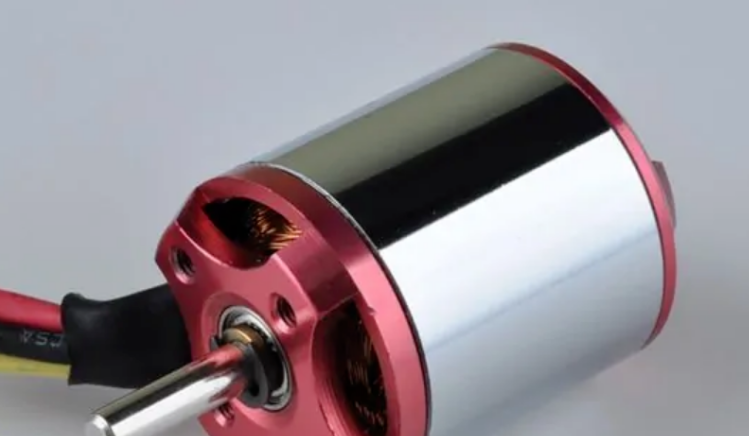
Figure 1
Micro motors integrate high-tech industries from multiple disciplines such as motors, microelectronics, power electronics, computers, automatic control, precision machinery, and new materials. In particular, the application of electronic technology and new materials technology has promoted the advancement of micro motor technology.
constitute
Although miniature motors are small in size, their internal structure is very complete:
- Armature core: The main part of the main magnetic circuit of a micro DC motor, used to house the armature winding. It is mostly made of stacked silicon steel sheets to reduce the eddy current loss and hysteresis loss generated in the armature core during the operation of the micro motor.
- Armature winding: The main function of the armature winding of a micro motor is to generate electromagnetic torque and induced electromotive force. In a micro DC motor, the armature winding is made of multiple coils, usually using enameled wire, but copper or silver wire can be used if there are special requirements.
- Commutator: In micro DC motors, the commutator and brushes are key factors for the continuous rotation of the micro motor. Their main function is to change the direction of current so that the micro motor can rotate continuously (brushless DC motors use Hall effect electronic commutation and do not have a commutator or brushes).
- Shaft: In a micro DC motor, the commutator and brushes are the key factors for the continuous rotation of the micro motor. Their main function is to change the direction of the current so that the micro motor can rotate continuously (brushless DC motors use Hall electronic commutation and do not have a commutator or brushes).
Features
It features high torque, low noise, small size, light weight, ease of use, and constant speed operation . It can be paired with various gearboxes to achieve the purpose of changing output speed and torque.
Application of micro motors in automobiles
There are many micro motors in cars. Since the popularization of electric vehicles and the improvement of various configurations, there are even more micro motors used in cars. Typically, a car is equipped with one car generator and a number of micro motors (averaging 15-20), while high-end luxury cars need to be equipped with 60-70 micro motors, and high-end new energy vehicles can have as many as 100 .
The development of automotive micro-motors has primarily revolved around improving comfort: to enhance the comfort of car use, subsystems that were previously manually controlled, such as door locks, windows, seat steering, rearview mirrors, and wipers, have gradually been replaced by electric motors. For example, features like electric tailgates, electric door handles, electric rearview mirrors, and electric seats in recent years have significantly improved the user experience and technological feel of these products, and many have become standard equipment in new energy vehicles.
Therefore, by knowing the number of micro motors in a car’s configuration, one can roughly determine the level of the car’s configuration and its comfort and luxury level!
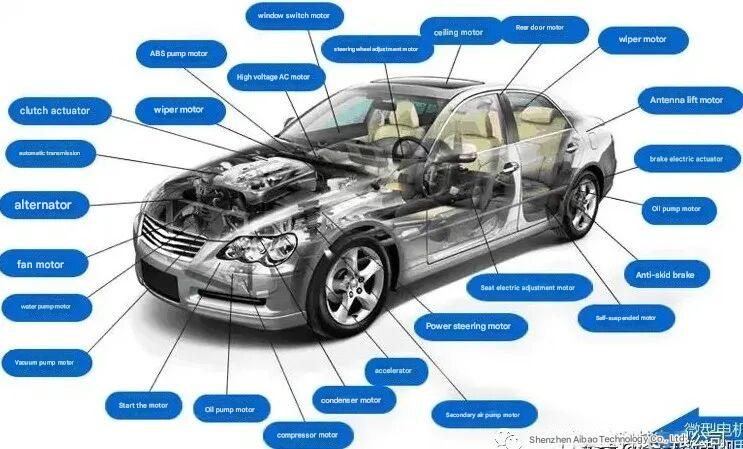
Figure 6: Automotive Micro-Motor Applications
- Engine components: Miniature DC motors are mainly used in automobile starters, electronic fuel injection control systems, engine radiators, and generators.
- Automotive chassis frame: Micro motors in the chassis frame are used in electronic suspension control systems, power steering systems, vehicle stability control systems, cruise control systems, anti-lock braking systems, and drive power control. Most use permanent magnet DC motors or permanent magnet stepper motors.
- Vehicle body components: such as central locking system, electric rearview mirrors, automatic retractable antenna, electric sunroof, automatic headlights, HUD, air conditioning vent control, automatic window regulator, anti-pinch window device, electric wipers, electric tailgate, electric seats, and other automotive parts.
With the diversification of automotive micro-motor applications, various micro-motor drive chips that match them are also developing rapidly. For details, please consult Xinda Motor Technology!
Post time: Apr-24-2026