The global motor industry is currently rapidly iterating towards ultra-high power density, high efficiency and energy saving, lightweight design, integration, intelligence, and high adaptability to special applications, completely breaking through the structural and performance bottlenecks of traditional radial motors. Relying on new material research and development, structural innovation, intelligent control algorithms, and process upgrades, many cutting-edge motor technologies have achieved a leap from laboratory research to large-scale mass production, widely empowering core areas such as new energy vehicles, humanoid robots, low-altitude equipment, high-end industrial equipment, and new power systems. Simultaneously, they perfectly align with the national industrial development requirements for upgrading motor energy efficiency and reducing carbon emissions. The following is a summary of the mainstream core technologies and industrialization progress of motors in 2026.
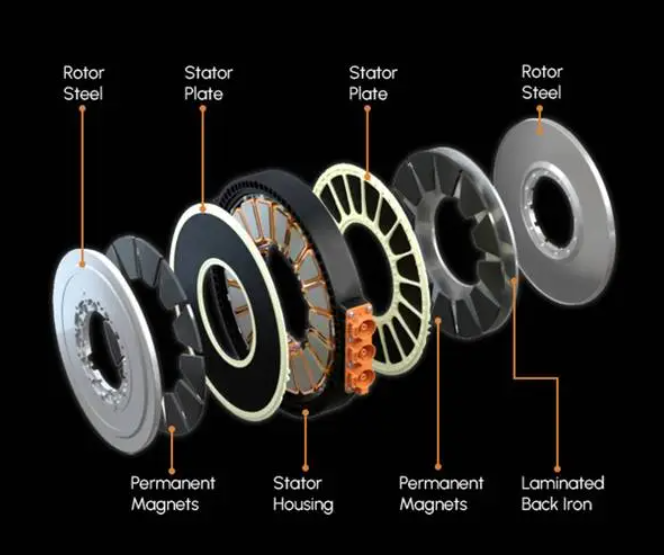
Axial flux motors represent the fastest-growing and most technologically advanced category of motors currently in industrialization. Unlike the traditional radial flux motor’s “drum-like” structure, they employ a “sandwich” flat structure, where the magnetic field penetrates both the rotor and stator axially, completely reshaping the motor’s physical form and performance boundaries. By 2026, China is expected to achieve breakthroughs in key technologies and mass production of tens of thousands of units. Their core performance significantly outperforms traditional motors. At the same output power, motor weight, axial dimensions, and metal consumables can be reduced by approximately 50%, with a maximum power density of 25.73 kW/kg and a maximum speed exceeding 18,000 rpm. They also boast advantages such as lightweight design, high torque, high energy efficiency, and low losses.
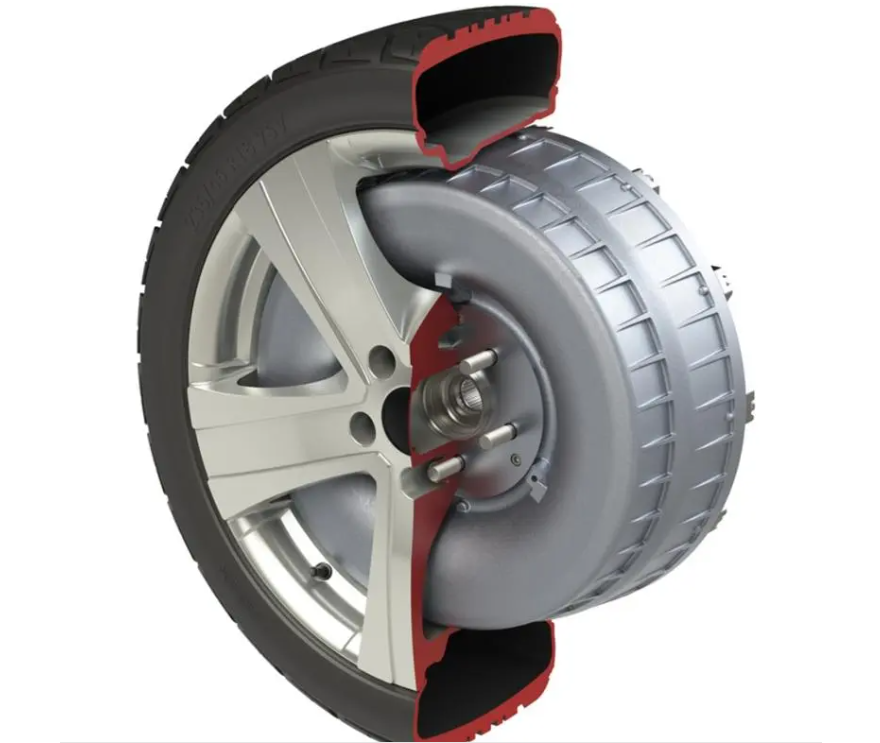
In-wheel motors are hailed as a core drive solution for future transportation equipment. Their core principle is to break away from the traditional centralized drive architecture, highly integrating the motor, brakes, bearings, and other drive units inside the wheel. This allows for independent wheel drive and control, completely eliminating intermediate transmission structures such as drive shafts and reducers, and reconstructing the vehicle chassis layout. In 2026, China completed its technological breakthroughs and launched the first compliant mass-produced passenger vehicle with an in-wheel motor, marking the official commercialization of this technology for civilian applications.
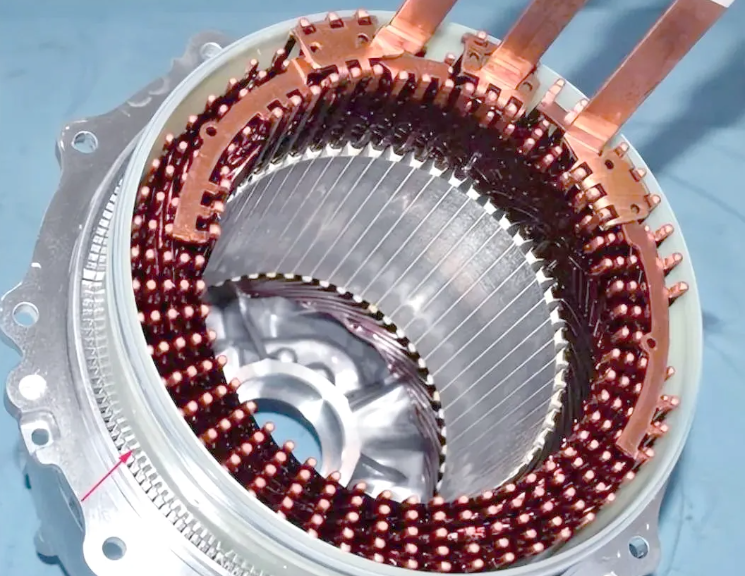
Flat wire motors are a cutting-edge motor technology suitable for humanoid robots and precision industrial equipment. Compared to traditional round wire motors, their core advantages lie in improving slot fill factor and space utilization. Through flat wire forming and high-precision winding processes, the motor slot fill factor can be increased by 40%, and the torque output can be increased by more than 50% in the same volume. This enables high-density power output in extremely small spaces, perfectly meeting the lightweight and high-precision requirements of robot micro-joints and precision servo equipment.
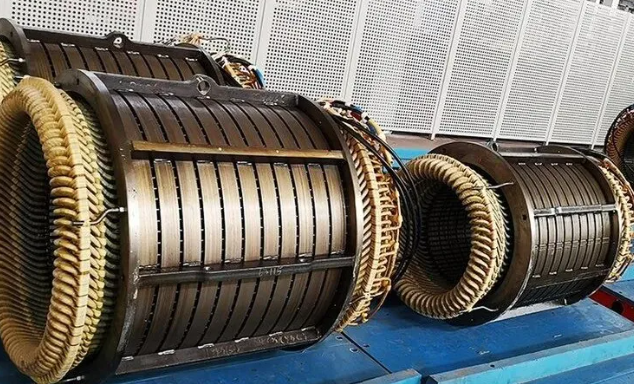
For high-end applications such as large industrial equipment and power grid generation equipment, key breakthroughs have been achieved in high-voltage, high-power motor insulation technology. Domestically, the core technology for stator insulation of 35kV large synchronous motors has been mastered, achieving complete independent control of the technology and solving long-standing problems in high-voltage motors, such as poor insulation stability, insufficient withstand voltage, and operational safety hazards. This technology significantly improves the operational stability, withstand voltage performance, and service life of high-voltage motors under complex power grid conditions, adapting to the safe and stable operation requirements of new power systems. It is widely used in large-scale power generation equipment, heavy industrial drive equipment, and high-power motors for power grid applications, filling a technological gap in the domestic high-voltage, high-end motor field.
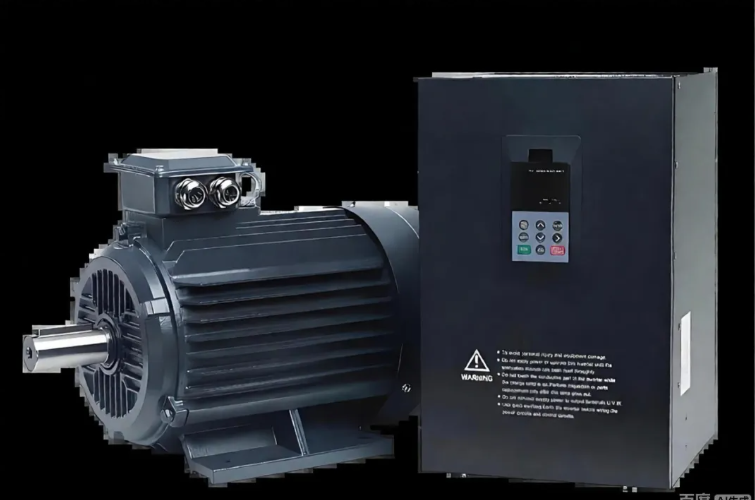
Based on the GB/T 32891 series IE-level international energy efficiency standard system, variable frequency speed control intelligent motor technology has been continuously iterated and upgraded, becoming a core cutting-edge direction for industrial energy-saving transformation. Unlike traditional fixed-speed motors, intelligent variable frequency motors can dynamically adjust speed and power output according to load conditions, adapting to complex variable operating scenarios and perfectly matching the needs of industrial variable frequency speed control systems. Among them, dedicated variable frequency motors can be designed and manufactured according to the IE4 ultra-high energy efficiency level, combining intelligent algorithms to achieve precise energy efficiency control, improving the overall energy saving rate by more than 15% compared to traditional motors. Simultaneously, with status perception, fault warning, and adaptive control functions, intelligent management of the entire motor lifecycle is achieved. Widely used in industrial production lines, HVAC equipment, and new energy supporting equipment, it is a core technology carrier for implementing energy conservation, carbon reduction, and high-efficiency compliance in the industrial field.
Overall, current cutting-edge motor technologies exhibit three core trends: First, structural innovation, upgrading from traditional radial structures to axial flux and distributed hub-integrated structures, achieving breakthroughs in light weighting and high power density; second, material empowerment, with new high-performance magnets, insulating materials, and thermally conductive materials driving leaps in motor performance and stability; and third, intelligent efficiency, combining frequency conversion control and intelligent sensing technologies to achieve precise energy saving and intelligent operation and maintenance, while ensuring energy efficiency compliance and scenario adaptability. In the future, with continuous technological iteration, high-efficiency, lightweight, intelligent, and specially adapted motors will fully replace traditional motors, becoming core foundational components for high-end manufacturing, the new energy industry, and the development of new power systems.
Post time: Sep-04-2026