Current transformers are measuring devices used in power systems to monitor and control the operation of the power system. Self-balancing current transformers are special; compared with traditional current transformers, they have higher measurement accuracy and reliability. They utilize the interaction between the magnetic field generated by the current in the conductor and the iron core in the transformer to generate an induced electromotive force (EMF). By measuring this induced EMF, the accurate value of the current can be obtained.
Another characteristic of self-balancing current transformers is their self-balancing capability. That is, within a certain operating range, the transformer’s output remains stable regardless of load changes. This self-balancing capability makes current measurement more accurate and also reduces the transformer’s impact on the power system. The output signal of this type of transformer can be directly connected to measuring instruments or automation systems without additional conversion devices. It is widely used in power systems, providing crucial support for the safe and stable operation of power systems.
Differential protection is a protection method used in power systems. It is mainly used to protect the motor from phase-to-phase short-circuit faults inside the motor and its leads, and can also protect it from turn-to-turn short-circuit faults.
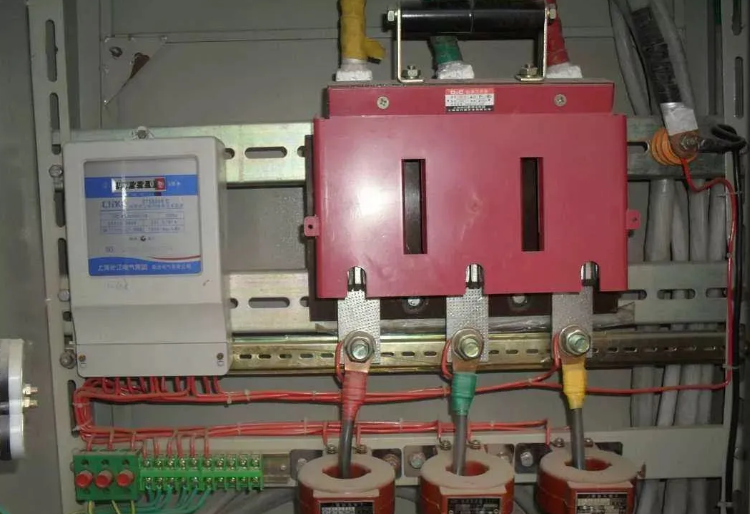
Differential protection is based on the principle that “the sum of the currents flowing into a node in a circuit equals zero.” In a differential protection system, current transformers are typically installed on both sides of the motor. These current transformers convert high voltage and large current into low voltage and small current signals, which are then input to the protection device. Differential protection determines whether a motor fault exists by detecting current imbalance and quickly initiates protective action. When a short circuit fault occurs inside the motor, the current flowing into the differential relay will be greater than the current during normal operation, thus triggering the protection device to disconnect the faulty equipment from the power supply to prevent further damage.
Based on a comparative analysis of the working principles of instrument transformers and differential protection, self-balancing instrument transformers are devices for measuring parameters in power systems, and can also be used as a subsystem in a differential protection system, becoming a high-performance differential protection device.
Post time: Aug-21-2026