The versatility of motor performance greatly facilitates customers’ design needs. However, for some relatively special working conditions or equipment, a high degree of integration between the motor and the equipment is the key to energy-saving control. Therefore, specific requirements for motor performance tendencies under special working conditions have been put forward.
For example, pump-specific motors suitable for load applications such as fans and water pumps can effectively solve the problem of “oversized motors pulling small vehicles” that result in low unit efficiency due to secondary selection and capacity expansion or motor power level limitations.
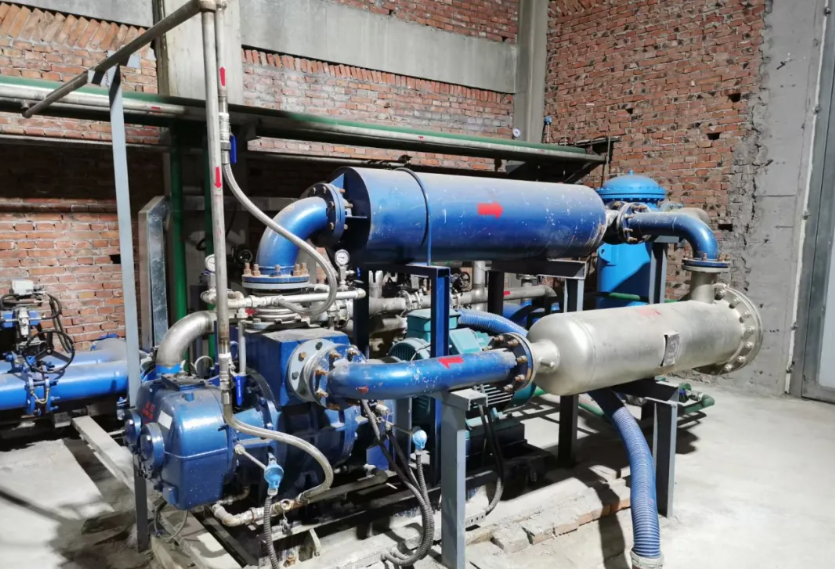
Pump motors are widely used general-purpose machinery, consuming over 50% of the nation’s total electricity annually. Of the small and medium-sized asynchronous motors produced each year, approximately 70% are used to drive fan and pump loads, primarily employing valve regulation to increase resistance and thus significantly reduce power consumption. Adjusting the flow rate of fans and pumps by changing the speed of the drive motor can dramatically improve system efficiency and save costs. The multi-pole variable speed three-phase asynchronous motor is specifically designed for applications requiring flow regulation, such as fans and pumps, offering high efficiency, energy saving, simplicity, reliability, and economy.
In some new types of equipment such as fans and pumps, variable frequency motors are used as the power source. Compared with ordinary variable frequency motors, the operating frequency range of motors for this type of load is relatively narrower. Therefore, necessary design adjustments and improvements are made to the ordinary power frequency motor, which is what we call a wide frequency motor. It is a type of motor with a small frequency adjustment range that is between a power frequency motor and a variable frequency motor. It can better meet the power requirements of fans and pumps and save energy.
Furthermore, when high-speed permanent magnet synchronous motors are used with centrifugal pumps, vortex pumps, mixed-flow pumps, and axial-flow pumps, the pump’s flow rate, head, and efficiency will change significantly, with a substantial increase in both head and flow rate. The gradual application of permanent magnet synchronous motors to various types of pumps will bring about an industrial and technological revolution in the pump industry, propelling energy conservation and emission reduction to a new level.
Post time: Mar-18-2026