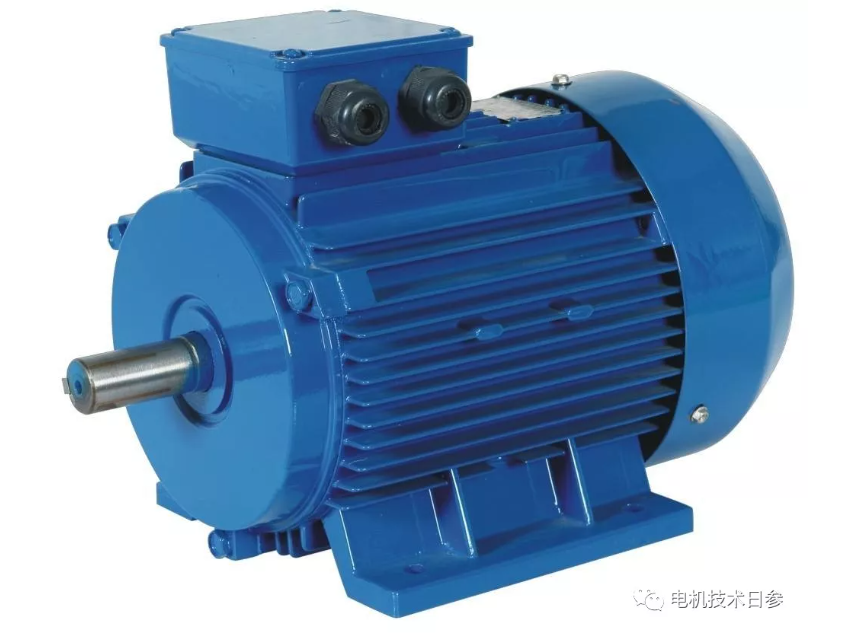
When a three-phase AC synchronous motor or asynchronous motor (hereinafter referred to as a three-phase AC motor) is powered on, it generates a rotating magnetic field. For an asynchronous motor, this induces a current in the rotor due to electromagnetic induction; while for a synchronous motor, an excitation current must be applied to the rotor. The motor rotor is magnetized, generating electromagnetic attraction and rotating. After being excited, a synchronous motor rotates at synchronous speed; an asynchronous motor experiences slippage during rotation.
The attraction of the rotating magnetic field of an electric motor is due to the fact that magnetic lines of force are the shortest possible. The electromagnetic force causes the motor to run on the electromagnetic center line. That is, the electromagnetic forces of the stator and rotor of the motor act radially, balancing them and thus preventing the generation of axial magnetic force.
Why does an electric motor generate axial force during operation?
● The axial force generated by the airflow of cooling air when the motor rotor fan is running under no-load.
● Due to factors such as manufacturing process and motor assembly errors, the mechanical centerline of the stator and rotor may deviate from the electromagnetic centerline of the motor, resulting in axial force.
● In order to reduce the influence of tooth harmonics, the stator or rotor is made into a skewed slot structure. Therefore, when the load is running, the electromagnetic force forces the rotor to deflect to one end and generates axial force.
●The electromagnetic centerline of the electric motor is the reference line for the connection between the motor shaft and the coupling of the driven mechanical equipment. However, since the electric motor is not marked with an electromagnetic centerline in its design and manufacture, the dimensions specified in the installation drawings provided in the accompanying documents are based on the designed mechanical centerline when installing the motor and connecting the coupling.
In actual operation, the motor will inevitably experience misalignment due to the non-coincidence of the mechanical centerline and the electromagnetic centerline. This misalignment stems from errors in motor installation and coupling connection, resulting in axial forces. These axial forces exert a pushing or pulling force on the driven machinery, potentially damaging the bearings or the entire machine, including the motor and the driven equipment.
For increased safety type synchronous motors without auxiliary excitation, the factors are even more numerous. Therefore, from a manufacturing perspective, improving lamination quality; reducing lamination burrs; strictly adhering to the process discipline of lamination number and lamination pressure to ensure stator and rotor core lengths; eliminating human error in installation and assembly; and requiring highly skilled technicians with refined assembly techniques are all crucial for reducing axial forces. Furthermore, designers must be proficient in manufacturing processes and product assembly processes, and comprehensively consider the magnitude and direction of axial forces generated by inherent factors such as motor rotation direction, fan arrangement, and skew slot direction in the structural design, ensuring they cancel each other out or are reduced to a minimum. Simultaneously, assembly technicians must participate in the initial commissioning test after product assembly.
In the debugging experiment, it is even more important to require the inspection technicians to adjust the displacement value and direction of the rotor position based on the actual offset data of the motor centerline and electromagnetic center measured in the no-load and load tests during the prototype assembly experiment.
Post time:
Aug-11-2026