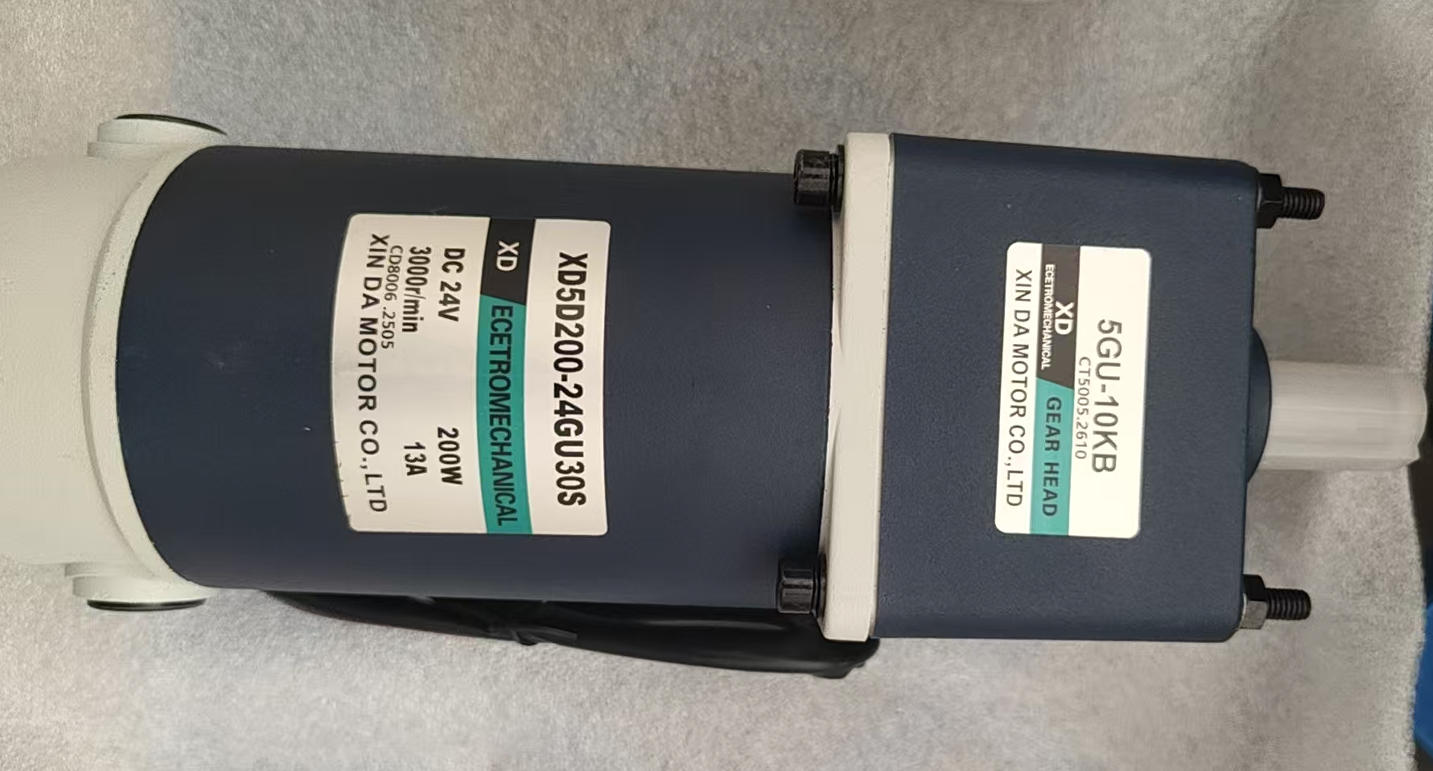
Transmission Principle and Installation Tips for Gear Reducer Motors
In industrial automation and mechanical equipment, power sources (such as motors) often have the characteristics of “high speed and low torque,” while actual actuators typically require “low speed and high torque.” Gear reduction motors are the ideal bridge to resolve this contradiction. Understanding their core transmission principles and mastering the correct installation specifications are key to ensuring stable equipment operation and extending its service life.PART 01The core principle of geared motorsA geared motor is essentially a power transmission machine with various installation methods to meet the structural requirements of different equipment. Core function: deceleration and torque increaseThe most obvious function of a geared motor is to “reduce speed and increase torque.” It uses an internal gear transmission assembly to convert the high speed and low torque input to the motor into a low speed and high torque output. Many transmission devices that aim to achieve low speed and high torque utilize this type of gear reduction mechanism.Torque calculation and redlineWhen selecting a speed reducer, how is the output torque calculated?Formula: Output torque = Motor output torque × Reduction ratio.While increasing the reduction ratio can yield greater output torque, there is an absolute red line that must not be crossed—the output torque must never exceed the reducer’s rated torque. Prolonged overload operation can easily lead to gear breakage.PART 02Installation and Usage Troubleshooting GuideThe performance of a geared motor depends not only on the quality of the product itself, but also on the installation and usage habits on site. The following four installation and usage guidelines require special attention:
It is strictly forbidden to strike the output shaft when installing couplings, pulleys, or other transmission mechanisms on the gear output shaft, especially for right-angle shaft reducers. Never directly strike the output shaft with tools during installation. This violent installation method will directly transmit the impact force, causing serious damage to the internal bearings or gears of the reducer. The correct method is to use the threaded hole at the shaft end to press in the bolts or heat the shaft for assembly.
Electricity safety: Always keep the junction box closed. Never run the motor with the junction box cover open to avoid electric shock or foreign objects getting caught in it.
For geared motors equipped with brakes , it is crucial to prevent water and grease from coming into contact with the brakes. If the brake pads become contaminated with oil, the friction will decrease significantly, potentially leading to brake malfunction.
Avoid frequent start-stop impact
Gears have a physical limit to their load-bearing capacity. During equipment commissioning and operation, starts and stops should be made as smoothly as possible. Frequent start-stop shocks can easily cause pitting or tooth breakage in the gears, significantly shortening the lifespan of the geared motor. It is recommended to set the acceleration and deceleration times appropriately according to the motor type using a frequency converter or driver.PART 03ConclusionAs a fundamental component of industrial transmission, geared motors, while simple in principle, directly affect the operational efficiency and safety of the entire equipment through the torque limit during selection and standardized installation. Adhering to scientific selection principles and rigorous installation specifications is essential to maximizing the value of the transmission system and contributing to the efficient and stable operation of automated production lines.
Post time:
Nov-03-2026